Friday, April 26, 2019

Petrol, Diesel and Elections !?

India is a country of contractions - we are ruled by a supposedly economically Right wing party - who can be said to have followed a broadly welfarist approach to Governance over the last five years. One expects a largely capitalist approach to markets from modiji and what you get often is an interfering, meddling and regulating government. Why does that  happen - the simple answer to that is elections.
Crude Oil Price - One month (Mar-Apr) - Source - tradingeconomics.com
Sample this over the last one month the crude oil prices have gone up by approx 10% (12% if we go by prices two days back) from approx $59 to $65. However, the petrol prices in India (basis Delhi Retail Prices) have barely moved from Rs. 72.85 a litre to Rs 73.05 per litre and Diesel Prices have risen from Rs 66.40 per litre to, hold your breath, Rs. 66.55 per litre.
Petrol-Diesel retail price - Delhi
src : mypetrolprice.com
Some bhakts may start smiling - see government is worried about the burden of inflationary pressures due to this on the Aam Aadmi. Hold on to your smiles and take a selfie as you read this. Because the reason is not a new found welfarist economic policy but the reason is lok sabha elections. It is almost a trend now - a few weeks before any major election the Modi government will shadow control the petrol diesel prices so that they do not move upwards and create a dissonance among voting public. 

I had written a facebook post way back on 12th May 2018 when a crucial Karnataka assembly elections were going on. At that time too 
Crude oil price (Indian basket) shot up 9+% in one month. Karnataka elections have ensured that in India - fuel prices have inched up less than 1%.

And then later I had written a detailed post (Read here ) on how the petrol/diesel prices surged within a week to catch up with International prices - once elections were over and the Government had no immediate elections to face.
Six Month Crude Oil Price
Src : tradingeconomics.com
And just as a proof to what I am saying here are two charts - one showing six months movement of International crude oil and the other petrol/diesel retail prices in India. Look at the close correlation in their movements - showing clearly that the government wasn't otherwise too worried about micromanaging fuel prices.
Six Months Retail Price (Petrol-diesel)
src - mypetrolprice.com

So dear reader - take my advice if you did not last November - on the last day of this election season - top your fuel tanks because if the International crude prices keep showing the same trend as they have been lately - then you will see a sudden surge in petrol/diesel prices.

This shadow regulation is so wrong at so many levels that people should respond to it with their votes. First, Petrol and Diesel have been deregulated and so they are marked to market now. The only way government should now be able to influence fuel prices is through change in taxation on the commodity. This shadow management of prices is bad policy and cheating at the same time. (Well I a repeating myself because cheating is bad policy, anyways). Secondly, such cynical short term management also reflects poorly on how the ruling party treats the general voter as a gullible, unintelligent someone with short memory who can be easily swayed into believing all is well by such short term management. Third, it also points out to the utter lack of any strong and credible opposition in our democracy. If they cannot point out to such obvious tactics - then what is the role they are playing in a democracy. Fourth, it is a sham when a economically right wing government plays worse politics then a left wing welfarist one.

I am tempted to right that perhaps Modiji is right - we Indian voters actually are such gullible even foolish people at times because we are taken for a ride by such senseless short term policy tinkering. 

Saturday, April 20, 2019

Winning at any cost !?

Technically by law, there is nothing wrong with her contesting an election. Yet, figure this out.
She was arrested twice for charge of Murder even when BJP was in power in MP (from which she was finally acquitted). She was charged with abetting terrorism. The last case is still in the court. She is out on bail. She was granted bail on grounds that her lawyers submitted to the court that she is very ill - that she is suffering from cancer and that she is almost bedridden.  She is now a Lok Sabha election contestant representing the largest political party in the country which is currently in power in close to 60% of the country including the central Government.

No, I am not judging Sadhvi Pragya Thakur - she may be innocent. OR she may very well be involved in the crime. Frankly, I am neither informed enough on the case nor am expert enough to have an opinion on her culpability. But I can clearly see one thing - that the benefit of doubt in such matters is surely not on her side. A national party should have absolutely avoided fielding her as a candidate. The only other example of this kind of brazen politics was when Congress under PM Dr.
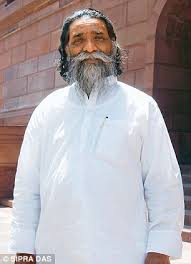
Manmohan Singh's government in 2006, inducted Shibu Soren as minister when he was out on bail on a murder charge. Both will remain in the annals of Indian political history as forgettable instance of political gambits that harmed our collective conscience for the posterity.

What is at display is a scaringly cynical form of politics that focuses on winning at any and all costs. It degrades politics to a game of table tennis where there is always the need to counter each move or messaging with another point/move to score a brownie every alternate day. To keep the pot of cooking narratives boiling hot and to snatch the headlines from each other. Actually no, it is more sinister. It is probably an effort to polarise votes along very dangerous lines of religious terrorism. A blind race to try and go to any lengths to win elections.

The polarisation is for all to see. There are enough number of my own friends and social media connects who raise questions on my not asking uncomfortable questions to opposition. But when it comes to asking inconvenient questions to modiji - they end up not just ignoring his overstepping of boundaries. Not just that, they would rather support the wrongs - with fake narratives, whataboutery, false assumptions or worse blind faith.

So in the case of  Pragya Thakur getting BJP ticket - you will hear - "So what? She isn't convicted yet or a worse one (even tweeted by the BJP) what about those who are on bail in the National Herald case." This blind comparison of a civil case to a criminal case on terror is the cynical horror that should concern us all as Indians. And then you will get a whatsapp post explaining in detail the torture she went through to justify her candidature. Never mind the fact that such torture (Right or Wrong) are used in most cases related to cases of terror, murder or such heinous crimes - and that surely does not justify her candidature till she is at least acquitted in the case. Think about it will we be OK with a Naxalite or J&K citizen charged for terror in the court and out on bail - contesting election on the ticket of a popular party in the country??

They are even ready to keep quiet on the horrendous statement from her on karkare - and I quote  “Maine kaha tera sarvanash hoga. Theek sava mahine mein sutak lagta hain. Jis din main gayi thi theek usi din iske sutak lag gaya tha. Aur theek sava mahine mein jis din atankwadiyon ne isko maara us din uska anth hua (I had told him that he will be destroyed. Sutak (a period of abstention in Hindu tradition after a death or birth in a family) comes into force within one and a quarter of month. It came into force the day I was arrested. And exactly one and a quarter months later he was destroyed by the terrorists.)"

Now I am not judging Karkare too. He may have actually been wrong or he may have been right. But it is a fact that he lost his life facing those terrorists on the field when we all including the politicians and Nationalists were hiding in safety. To equate his death to his treatment of her under custody for interrogation on a Terror related case is ......... I can't find a disgusting enough word.

But then you are in for more disgusting lows - the same people who wanted me to comment on negatives of opposition too so that the analysis is "balanced" keep quiet. I don't want to be like them. I think they have the right to keep quiet on the matter if they choose to, even if for the cynical reason of supporting Modi willy-nilly.

But no, that's not all, some of them come up with posts that justifies her statement. And more, their justification comes in the form of targeting Karkare and maligning him and his sacrifice. So you will receive whatsapp/FB posts that claims - he wasn't wearing a bulletproof jacket when on the operation, or that he was drunk during the operation. Some even pointed out to the fact that he had not fired a single bullet before he died. That in fact ASI tukaram omble was more brave and more deserving than Karkare. Conspiracy theories spinned in favour of God knows whom. What completely bypasses these minds is that even if these are facts (and they are not keep reading) they are irrelevant to what happened. He died on duty facing the terrorists.

Just for the sake of truth - All of these are fake crap - He was wearing a bulletproof jacket during the ops, He was dead sober - not drunk. The only factually correct statement is he did not fire a single bullet - but as you would have guessed it - this is also a misdirection. He did not fire a bullet because he could not, as his car was ambushed. Obviously, not because he went their to end his life so that he could get a Ashok Chakra. Who in his right minds would spin such stories.

I am really worried about the time when, and if, Pragya Thakur actually ends up winning this election. The same people will probably rejoice pointing fingers at us - as if winning the election would be a certificate that she was always right and that karkare was the one wrong.

We are witnessing a critical phase in our existence as a democracy where winning at all costs have become the objective and winning is considered as the certificate for being Right. I have always had a very strong faith in the maturity of our democracy and its systematic checks and balances. I have always believed that despite its imperfections - the loud and open democracy that we have in our country is vibrantly secure. However, this election and its debates have really weakened my faith. Let's hope this phase too shall pass.

Ps. What has happened meanwhile is that Pragya Thakur has taken back her words - she said - "“I felt that the enemies of the country were being benefited from it, therefore I take back my statement and apologize for it, it was my personal pain. He (Hemant Karkare) died from the bullets of terrorists from the enemy country, he is certainly a martyr." I think that should rest this case at least. The larger point that this post makes, remains. 

Sunday, April 14, 2019

#Sunday गज़ल - अजनबी से हम

निदा फाज़ली सा. का अंदाज़-ए-बयाँ ही कुछ और था - गहरी बात सरलता से कहने की उनकी अप्रतिम खूबी मुझे उनके लाखो चाहने वालो में से एक बनती है - खुद मेरी भी पहली बार पढ़ी हुई इस गज़ल का लुत्फ़ उठाइए इस रविवार :-) 

जब से क़रीब हो के चले ज़िंदगी से हम 
ख़ुद अपने आइने को लगे अजनबी से हम
कुछ दूर चल के रास्ते सब एक से लगे
मिलने गए किसी से मिल आए किसी से हम

अच्छे बुरे के फ़र्क़ ने बस्ती उजाड़ दी
मजबूर हो के मिलने लगे हर किसी से हम

शाइस्ता महफ़िलों की फ़ज़ाओं में ज़हर था 
ज़िंदा बचे हैं ज़ेहन की आवारगी से हम 
(शाइस्ता - सभ्य, शिष्ट)(फ़ज़ाओं - वातावरण, माहौल)(ज़ेहन - मन, विचार,सोच)

अच्छी भली थी दुनिया गुज़ारे के वास्ते 
उलझे हुए हैं अपनी ही ख़ुद-आगही से हम 
(ख़ुद-आगही : अपने आप को समझना, आत्म-मंथन)

जंगल में दूर तक कोई दुश्मन न कोई दोस्त 
मानूस हो चले हैं मगर बम्बई से हम
(मानूस : जिसकी घबराहट दूर हो गयी हो, मुहब्बत करनेवाला)----------------------------------------------- निदा फाज़ली सा.

Monday, April 08, 2019

Congress Manifesto : दाल तड़का

Election 2019 will be remembered as a milestone for many reasons - one of them would be the entry of Election manifesto in the public debate space. No election that I remember generated so much interest in manifesto of a Party as did this year's Congress Manifesto. In fact, a few hours after it was released - a few friends on the FB started asking for my views on the manifesto. This may make one feel like a celebrity as people look forward to one's views. No such delusions with me - I know most of them asking (not all though) see me as a Congress sympathiser and so they may be wringing their hands in glee as certain IT cell has already pronounced this manifesto as criminal minded, anti-national and pack of lies. So for whatever it is worth - here it is. (You can read the entire manifesto here )

There are a few refreshing changes in the manifesto - For one, It stays away from becoming a tirade or critique of current government. Rather it tries to set its own agenda. If someone reread the "Sankalp Patra" of BJP for 2014 - instead of listing its promises it read more like a list of grudges with the UPA government of the time.

Well Structured
It is very well structured and lucid. Just to be fair their last one was also not bad but this one is far better. Its presentation is attractive unlike the ones INC used to spurn out in the past. BJP's professional communication has started to rub on the INC off late, however they are still no match to the BJP on that front. 

So this one is neatly structured in six parts
काम - focussed on Employment and Growth
दाम - focussed on Economy
शान - focussed on Hard and Soft power of Country
सुशासन - focussed on Governance

स्वाभिमान - Focussed on Weaker Sections
सम्मान - Focussed on Individuals

Each section further subdivided neatly into specific target segments catered to. So full marks for clarity of vision and its communication. Let's look at brasstacks then.


More Concrete than Ever
The second refreshing change is that the manifesto goes beyond a statement of intention. Unlike earlier manifestoes of both the BJP and the Congress - this manifesto has at least a few concrete, actionable proposals. Earlier a manifesto used to read as a list of good sounding directional statements - almost nil on specifics. You can check their 2014 manifestoes here for Congress and here for the BJP. (Could not get the direct link for the BJP).

Here is the sample of some concrete proposals in the Manifesto
1. NYAY scheme to Guarantee a minimum 12000 PM income to poorest 20%
2. 34 Lakh jobs by March 2020 - identifying where thes jobs will come from
3. Separate Kissan Budget every year
4. Establishing 
National Commission on Agricultural Development and Planning.
5. Double expenditure on healthcare to 3 per cent of GDP by 2023-24.

6. Right to Healthcare Act & guarantee free diagnostics, out-patient care, free medicines & hospitalisation
7. Compulsory & Free school education from Class I to Class XII
8. implement the Forest Rights Act, 2006 - No forest dweller to be unjustly evicted.
9. Enact privacy law and restrict Aadhaar use to the original purposes.
10. Cities/towns to directly elected mayors and introduce right to housing
11. Scrap Niti Aayog & 
reconstitute Planning Commission with re-defined responsibilities.
12. double the allocation for Education to 6 per cent of GDP in the next 5 years

That's an impressive list of concrete proposals. There are a few more but I think you get the idea. These are proposals on which you can hold them to answer later as to what they did or did not do.

Largely Welfarist 
The manifesto takes a rather welfarist approach to Governance - which is a step back from Dr. MMS's reformist approach with a capitalistic tilt. Its three primary offerings the NYAY scheme, Universal Health Care and Compulsory and Free school education are all subsidy driven and would obviously ask for a very large dole out.

The message is clear - the Congress has not, it never did, develop the confidence to ask for votes based on development. That is not surprising because it had failed to cash in on some real and positive development of the UPA era.


However Reformist too
The positive side of the manifesto is that it promises some broad reforms that are badly needed and are long overdue. Largely in the administrative domain - Like police, Judiciary and Local Governance. The promises made here are indeed very positive. Here is a mouth watering list
  • Autonomy to institutions (arguably the Modi government has done maximum damage to institutional autonomy), 
  • scrapping of NITI aayog (the NITI aayog has turned out to be more of a power center under NDA that meddles with other autonomous institutions rather than focussing on robust policy formulation and implementation), 
  • Single GST rate (While Modi govt deserves credit for finally implementing the GST - it is neither one tax nor simple currently)
  • Implement Direct Tax Code (The draft proposal of the DTC during UPA-II was completely forgotten by the Modi government. This would be single biggest boost to the honest middle class tax payer of India, if implemented)
  • Review of RTI (Another powerful Law that was blunted by the Modi government)
  • New model of Town/Cities governance by directly elected mayors is a very interesting and powerful idea. 
Again there are more but I think you get the drift. It is progressive in its approach too.

Maintains Continuity
The manifesto promises to continue with some of the successful ideas of Modi Government like Swachh Bharat, Rural housing and it also promises to continue work on some long term desirable goals like that of Make in India - by focussing on the increasing the share of manufacturing to the economy.

Promises Personal Liberty

By offering to restrict use of Aadhar to its original mandate, or by promising to scrap the sedition law which was misused even by earlier Congress government, or by ensuring the implementation of 33.33% women quota and a slew of other measures the manifesto tries to bring about a debate on the line to be drawn between privacy and state intervention in personal freedom. This is badly needed in today's fast changing world.

Million Dollar Question
One of the most severe criticism of the manifesto, and justifiably so, is where would the Party generate all the resources required for funding some of the huge promises. There are two ways to look at this question - one, that a manifesto cannot be expected to answer that question because that's not the objective. In any case - what is important is an intent to bring about the change - the constraints will remain and solutions have to be found out. One will have wait and see how they implement it. An optimistic economist will see this as doable by a judicious mixture of undoing some legacy subsidies and subsuming them, by depending on the expanding economy - hence counting on the constantly growing tax kitty and of course some additional tax levies. The manifesto just says that it expects this cost to reduce overtime as more people are pulled out of poverty. That at least continues to be true even now.

The other way to look at it - real concern. Given the history of our meandering, bureaucratic and complex implementation cycles - such proposals can play havoc with the fiscal balance which can never be happy development. The jury is still out.

What about the criticism 
The manifesto has erupted emotions of all kind and there have been a string of criticism - lets spare a couple of lines to each 

1. It wastes Taxpayers' Money
Wastes or Invests has to be seen during implementation. There is little evidence to prove that the current government did not waste taxpayer money, as well. So either ways this is not really a strong argument, if you like some of the proposals.
2. It is anti-national
Please. Spare me the nationalistic rhetoric. A peacemaking approach to terrorism is what has been Congress principle for decades. That is different from the current approach of aggressive domination - but surely nothing anti-national about it. In fact it is bold political gambit to appeal to those who may already be feeling frustrated by the loud pitched, over the top war mongering as the solution to terrorism. And yes reviewing AFSPA is not anti-national. BJP itself had promised it for kashmir in 2014 and has done it for north eastern states. The point is - you may disagree with the policy but calling it anti-national is empty rhetoric.
3. It is old wine in new bottle
True to some extent. Many proposals in the manifesto has been there in Congress manifestoes over the decades. One can only measure the extent of push they got under various regimes. However, as I pointed out in this note - there are interesting, well thought out and positive new ideas as well. Also it is inevitable - true of the current BJP government also. Already the BJP is saying five years is too less to implement everything.
4. It offers doles to fetch votes.
This criticism is just being cute. Obviously an election manifesto sells its ideas to get votes. The subsidy bill of current government has actually grown despite a low oil prices and an expanding economy. Many of its schemes are doles too - whether they be reservations, insurance or Kisan samman. The fact is it will be decades before we are able to exorcise governments of welfarist policy. On a different note for an economy like India that is needed as well - a mix of welfare and growth approaches to balance the inequity in the system. I am sure as we see the BJP manifesto coming out - we shall see promises there too.

Final Thoughts
All in all this manifesto is a sincere effort to sell ideas - to bring debate back to policy and Governance and as an answer to the high pitched rhetoric of Modiji around nationalism and religious fervour. The devil of course lies in the details of its implementation. It looks like a very ambitious vision - will face many roadblocks of constraints and hence like always will have to be done in phases and with delays. The point is that we cannot brush it away as a useless piece of paper - if it appeals to you too, it needs to be tried. At the least it has and will force the BJP to answer some real questions on real issues facing India.

Thursday, April 04, 2019

Institutional Surrender Intensifies !?

You must be aware that the Election Commission allowed the Movie on Narendra Modi to release in April while it considered the release of a book on Rafale controversy in violation of the Election Code of Conduct. They probably will not stop Modiji to inaugurate a Temple in UAE the foundation stone of which was also laid down by the PM.
It is nothing new - Governments try to do surrogate advertising or promotion trying to bypass the code of conduct without technically violating it. The problem of course is differential treatment to cases by a constitutional body like that of the EC. It is already dragging its feet on the matter of Governor Kalyan singh calling for need to elect BJP again or on the matter of Amit shah calling the Indian Army Modi ki Army - by referring earlier matter to the President while taking circuitous route on the second one.

And then pops on your DTH tv channels a new channel - Namo TV dedicated to speeches and rallies of Namo. In an era where you have to choose which channels you wish to be broadcasted on your TVs - this channel simply pops up on your TV one fine day - without needing your permission. And to top it - this channel started just like that - it never applied for a broadcast licence - no permissions taken. It also does not have a compulsory security clearance and this makes the enterprise illegal under broadcast laws.
Interestingly the I&B ministry hinted to media that NaMo TV doesn't need conventional clearances since its not a regular channel, but an 'advertising platform' being carried by service providers (similar to, say, The Home Shopping Network). LOLssss. While at least Tata Sky has claimed it is a News Channel.
In short if - Namo channel continues to broadcast with all these lapses - and is thumbed into your chosen set of channels - yet again two other important institutions will have surrendered to powers that be - the Prasar Bharti and more worryingly the Election Commission. Worrying but not surprising. Really !!

Wednesday, March 13, 2019

Movie Review - Badla

The repertoire of Sujoy ghosh as the director has some fairly forgettable films - like "Home Delivery" and "Aladin" - a sweet but unsuccessful "Jhankar Beats" and two very impressive "Kahani - 1 & 2". The latest one "Badla" firmly establishes the genre in which he is best - Badla is everything a movie can ask for from a suspense-thriller.

When was the last time you watched a movie that starts and finishes in a one BHK beautifully furnished flat, the only solace in which is a window with a view to a busy street in a happening British city, revolving around just three main characters and yet you remain glued to your seat, latching on to every scene and word - guessing what comes next. You only go out of that room to recreate the scenes of the story but you are back immediately.
I remember having that experience as a kid, watching a movie "Ek ruka hua faisla" on the door-darshan because that movie did not get any theatres for commercial release. However, that movie was another era and hence is no basis for comparison.

This one weaves almost an Agatha Christie murder mystery and I don't find a better simile because the movie is set in so clearly stated british environment, tones and style. Consider this - a murder happens in a room of a hotel 200 miles away in a snow clad place with only one tram-ish transport to and from the hotel. The body is in the bathroom showered with Pounds (or were those Euros 😃 ) and the suspect with her fingerprints on the vase that was used to kill the victim, sitting beside the body trying to save him when the police enters the scene. The suspect is screaming there is someone else in the room and pleads the police officer for help as the officer arrests the suspect. There is absolutely no signs of anyone having entered or left the room and there is no evident possibility of anyone having possibly done that. And yet there will be no suspense or thrill if this obvious suspect would be the killer. Would there be?? 😉 And while I am tempted to take you through the very Aghtha Christie-stic twists and turns of the plot but I think you are already sitting up believing me when I say that it is a Agatha murder mystery alright - so I rather suggest that you watch it - in a theatre, mind you. And let me assure you there were no spoilers in this review till now. You will enjoy the movie as much as I did even after reading this review.
I have often said that good cinema is about imaginative storytelling and here is another movie that proves it. You come out and say well it was a simple story - then why the hell were you sitting on the edge the seat for the full 121 minutes with gaping mouth and appreciating mind. Because the story is narrated in a gripping style, you are already curious about what comes next. A very tightly written script and tighter screenplay does a marvellous job - as does a very crisp and still fluent editing. It's an unputdownable murder mystery.
Taapsee Pannu turns out another stellar performance after "Pink", "Mulk" and "Shabana". She is talented and often her talent is wasted in movies like "Manmarziya" and "Judwaa-2". She holds on with confidence against the Big-B perfectly portraying the young, successful, sharp witted independent business woman who loves her hubby and the kid and yet is analytical, poised, confident, controlled, ambitious, liberal, evil - even cold almost sinister. Taapsee plays the emotions although the effort shows. Yet she does not let this movie become just a Big-B movie.
Amitabh Bachchan is Big-B. I generally cannot imagine anyone else in the roles he does in such a movie. In this movie you won't too. Think!! Two people sitting in a room narrating a story to you - you will not be bored only if you have the voice, eyes, delivery and style of Big-B. Yet again he wins me over as his long time fan. In fact, I relate so much to the first half of his character - cold, analytical, data/fact driven and always asking for the other aspect of the case.
And yes - some very crisp, timely and unforgettable dialogues are like the icing on the cake. Here are some favourites
"बदला लेना हर बार सही नहीं होता लेकिन माफ़ कर देना भी हर बार सही नहीं होता"
"वो मुर्ख होता है जो सिर्फ सच जानता है पर सच और झूठ का फर्क नहीं जानता"
"सच वही होता है जो साबित किया जा सके"
I tried hard but can't find a fault in the plot or picturisation. Maybe the only problem with this movie is that it is not for light casual watching - because a few seconds of distraction can cause you to lose a thread. Or that at the end you realise that movie did not have a song to let you relax and eat your popcorn, maybe. A few people may disagree with me when I say that I love movies the way "Badla" ends. Simply.
Badla is a "must see" recommendation from me - a movie that helps you realise that there are at least three aspects to every story/issue/case - my side, your side and the truth. Enjoy yourselves - and let me know later how it was.

Tuesday, October 16, 2018

#MeToo : Don't be Distracted

A lot of sound and fury generated over the #metoo movement misses a fundamental point.
To me, the #metoo movement is an indication of changing times and mindsets. It is a signal of increasingly more confident, articulate and brave women who are finally getting into their own and deciding on their own terms. Yes, it is primarily a movement of urban, educated women - but so what, if it gathers steam and it has and if it sustains it would eventually reach every nook and corner.
Many don't get it - that #metoo is about the recognition of the fact that getting sexual favours because of your position of authority or power is a no-no. It is also an assertion that a few more pillars of male domination have started to crumble. It is a manifestation of how deep and wide this mindset has purveyed in our society. Most of us know that such skeletons exist in the corporate world too and so this movement is the confidence needed by those ladies who are under constant pressure to allow, ignore and tolerate male voyeurism.
Don't women take advantage of they being women to win favours and promotions? 
Yes, probably many do. That's not the point. Many women don't. Because many do - it does not make every woman available. Men can decide not to give those favours too. So, when we make it sound as if men did nothing wrong when a woman used her feminine charms to win favours from him, it is disgusting whataboutery.
Aren't many women using this opportunity to settle scores, destroy reputation unfairly or simply trying to get their few weeks of limelight or publicity? Yes, it must be true in many cases - but by far, look at those women who came out and spoke or wrote about male harassment. Many of them are well entrenched in their careers, have a family and reputation of their own and their families. Would all of them put all that on stake to achieve one or more of the above aims. I severely doubt that. The trouble is that not all cases are same - in fact each one of them probably is unique.
But why now. What were they doing for decades? If they had any honour they should have walked out of such jobs immediately or should have complained earlier. This is like saying Nehru should have managed better. It is impossible to understand those times, contexts and constraints. Instead of questioning the timing let's focus on truth. If their stories are true - does it matter that it came out so late. Should the perpetrators be not questioned because these are crimes committed years back.
But what if some unsuspecting and innocent men are targeted and their reputation destroyed? That is a nutty question. From what I have read of the many accounts (and I must have read close to 50 plus by now) most of them sound fairly true. IMO this movement should continue despite the risk of smearing a few innocent reputation and lives. Of Course those spearheading the movement need to do their due diligence before a story is publicised. The male in question also need to come out honestly and deny/accept the extent of allegations against them. Till now Varun, Chetan Bhagat and Siddharth Bhatia were swift and categorical in their denial/acceptance and so there are reasons to believe that they may have been targeted. But many others like MJ Akbar, Subhash Ghai, Alok Nath, Vinod Dua to name a prominent few have kept studied silence or have rambled some incongruities making the allegation look all the more credible. Of this MJA has finally responded.
The most ridiculous of the response has come from our junior minister of External Affairs. While he says the allegation are lies - he names it a political conspiracy. It is such a weak argument. 15 women have come out with their stories against his predatory style. They are from various contexts from fairly young to now middle aged and beyond. Almost all have similar signature style of advances made - if it is a political conspiracy, whoever organised he/she is a genius. No sir, it most probably isn't a political conspiracy.
His response to the allegation makes the stories against him more credible. Out of 14 stories that came out before he responded - he has filed criminal defamation against just one. Only two possible interpretations exist - one, at least the other 13 have some grain of truth in their stories; two, the filing of defamation is a intimidatory tactic to shut others up and to prevent this initial flow to become an avalanche.
While we are at it - we need to make a fine difference between sexual harassment and adventurous flirts. From all accounts available - chetan bhagat made flirtatious advances to a couple of females. But in all probability he did not stalk or harass them when they were not interested. That makes his act socially inappropriate, awkward for his personal relations, even stupid in some degrees. But it is by far not harassment. Morale of the story - let the #metoo movement not take the fun out of relationships.
The most important thing to learn from #metoo movement is that consent is everything. It doesn't matter what the character of women in question is, it doesn't matter if they are urban, educated and modern women with choices, it doesn't matter if they drink, smoke, party, stay late at nights. What matters is that when they say no, men need to stop.
Think about it this way - as a man, you don't want a relationship with a woman - can/should she force it and you would be ok with that. It's an uncomfortable question but the days are not far when male harassment will be a reality. Men should frame the rules in a more balanced fashion.
All in all the movement should bravely stand in front of male entitlement and must try to ensure that it is not derailed by over enthusiasm or by jealous pursuit of vengeance or by persona targeting.

Thursday, May 24, 2018

Fuel price surge : Elections over !!!

On 12th May I had written a post on petrol price expectation and it has happened exactly as anticipated. Close to Karnataka elections - petroleum prices were held rock steady for close to 20 days and the crude price rise was absorbed by companies. Immediately after the voting was done and dusted there is a steep price rise that has continued till now. (check the two graphics - petrol and diesel prices - data for Mumbai).
It is a shame that public does not see through such brazen attempts by the Government to influence their opinions. Petrol/Diesel prices have been deregulated and theoretically the companies are free to link them to crude prices in tune with market. But it is clear that team-Modi does every little thing that in their perception may affect their electoral fortunes - policy be damned.

Like always - bhakts will post another graphic that will show that the annual fuel price rise during MMS years have been more than the four years of Modiji. To them here is a suggestion in advance - don't get swayed by BJP IT cell production - instead do some simple googling. That graphic needs to be seen along with the rise in International crude oil prices. Here are some brilliant nuggets collected by my friend K Jayaraman
1. In 2013, Brent Crude price touched about $119.
2. Todays international price is about $ 80 a barrel, i.e it was 50% more when we paid lesser than what we pay today.
3. Crude prices were at an all time high of $ 145.61 in July 2008.
4. Only Indians pay an all time high price when internationally it is almost half the all time high price ( $80 to $145.61)
5. Excise duty on diesel has been increased by about 400% since this govt. came in
So do not be fooled by the BJP IT cell propoganda - tha fact is we are being taxed left, right and center to fund the profligate means of our politicians.
and yes someone will also tell me to factor in loss of value of currency to compare with prices in MMS era - to them I would suggest also compare the rise in salaries and job creation that happened in the MMS era and last four years. Dr. MMS will win hands down on that front too.
BTW here are some celebrity statements on petrol price hike during Dr. MMS tenure
Salman Khan - "Don't worry abt petrol , sending u a pic of gobar all u hv to do vit it is make gas." - May 14, 2010
Narendra Bhai Modi - "Massive hike in #petrol prices is a prime example of the failure of Congress-led UPA. This will put a burden of hundreds of crores on Guj." - May 23, 2012
Amitabh Bachchan - "Pump attendent - 'Kitne ka daloon ?' ! Mumbaikar - '2-4 rupye ka car ke upar spray kar de bhai, jalana hai !!" - May 24, 2012
Smriti Irani - "Petrol price hiked yet again. Aam Aadmi ki UPA sarkar now only works for khaas tel companies!!" - Nov 3, 2011
Akshay Kumar - "Guys I think its time to clean up your bicycles and hit the road, expecting another petrol price hike." - 27th Feb 2012
And this post is not even about the price rise - it is about the dumb treatment that the government gives us as "praja" - regulated free price mechanisms to ensure that the boat is not rocked just 15 days before a state election is as cynical as it can get.
Sit tight very soon - our diyar modiji will chair a meeting and then announce a meagre excise duty cut that the BJP IT cell will hail as a national sacrifice to help the poor and the middle class and diyar bhakts you will be fooled yet again. Enjoy your dream ride of hypcorisy and double talks.

Saturday, July 01, 2017

The GST Genie - Out of the bottle


Last night as the clock chimed twelve, India entered the all new GST regime. For close to fifteen years since it was suggested, it has been discussed, opposed and supported. It is now a reality. 

A few of my friends wanted me to write my views on the GST. So I kind of compiled some connected and unconnected musings of my own


Culmination of Long, deliberate and steady Tax Reforms
In 1991 when Dr. Manmohan Singh ushered in Liberalisation and Economic reforms marking the movement of India from a socialist economy towards embracing a capitalistic one. One of the first areas to come under the reform hammer was the taxation regime. From a direct tax regime (Income tax) that used to tax at ridiculous effective rates of close to 70+% we have a far more rational Income tax regime now. 

Similarly, the Indirect regime was first rationalised - meaning the rates were made more practical (one still remembers that Ravi Shastri who won an Audi as the Champion of Champions reward at the Benson and Hedges cup tournament in Australia was unable to bring it back to India because he was expected to pay more than the price of the Audi itself as the import duty for the gift that he got free) - in phases. 

Then, the cascading effect of taxation at each stage of value chain was gradually addressed by bringing in the Value Added principle(VAT), which also happened in stages. We heard and used the terms CENVAT, MODVAT and VAT.

Meanwhile Service Tax was also introduced as Services took increasing share in the GDP. And since its almost unheard and untalked of entry way back in 1994, it is now a source of Lion's share of Government's tax kitty.

As the GDP of India multiplied 40 times from a meagre Rs. 5.86 Lac crores (nominal GDP) in 1991 to a an impressive Rs. 135 Lacs crores by 2016 - the tax regime had its own problem of administering the sheer size despite it growing more rational and simpler.

GST was suggested as the culmination of this process - expected to result into (a) Value Added Taxation in the true sense of the word
(b) One form of Indirect Tax getting rid of so many offshoots at both central and state level 
(c) increased size of the formal economy.

After more than 15 years of consultation and debates it is now a reality. In many ways then it is a historic success of consistent movement across governments and generations towards improving the taxation regime of the country. That the, telecom, data and Internet revolution happened in the mean time is a fact. It ensured that the GST finally happens in a shape that not even its originators would have imagined way back, is an added advantage. The GST will probably first such reform in India that will be executed on a fully IT enabled backbone.

So, is it good for the Economy/Country?
There are many, many goods to the idea. 

One Tax
That there should be one integrated indirect tax in a country is an obvious good about the idea. It should/must simplify tax practices for the business in general as it currently deal with a web of indirect taxes at different levels coming across multiple and overlapping authorities. It should also increase business productivity as one expects to reduce delays and red tape in the tax administration system. It also should address the problem of tax cascading effect due to non-integration of Goods and Services and also due to differentiation of sales, Excise, various duties etc. However, there is probably more to it than just getting rid of the entry barriers at each state border and maybe even at the entry points of a few cities.

Challenges
As always the devil may be in the detail. As the GST went through its trials and tribulations - the form in which it is finally getting implemented may be a fairly complex one. Almost seven plus slabs of taxes with three types GSTs makes it a little difficult to understand. This may be the first barrier for small businesses to embrace the tax system and people may try to find a way out of the system if its compliance is tedious and costly (both of which it appears to be in the first look). More on this later. :-) 

Less Tax Evasion
Our country is notorious for bypassing the tax system and it is believed that there is a parallel informal economy outside the indirect tax net, probably as large as, if not larger than, the formal economy.

GST has an inbuilt incentive to comply with the tax system as it implements the VAT principle of letting the businessmen pay tax only on the Value Added (which in simple terms is difference between the sales and cost of the good) across goods and services (integrated). One expects then that the businessmen will be more amenable to sell all goods/services billed and so it should dent the parallel informal economy.

Challenges 
The jury remains out on this. One needs to appreciate that tax evasion galloped due to two reasons - one was irrational and ridiculously high levels of taxes, so much so that tax evasion was the only way businesses could have remained profitable at one point of time. The other was a corrupt and decayed tax administration system where the officials were more interested in harassing the tax payers and generating instances for them to get bribes. The increased cost of doing business due to this was an incentive for business to bypass the tax system.

While over the decades the tax structure has become increasingly more rational (and it continues to move in that direction) little or nothing seems to have been done to fix the babus for whom corruption has settled in as a culture. And this remains the biggest question mark on how successful will GST be in preventing tax evasion. 

The nut and shell of it is - GST may not be able to address tax evasion much if the cost of evasion remains less than that of complying with it and till evasion is simpler than compliance. The tax rates seem to be pretty high and add to it the increased cost of compliance due to increased paperwork and one is looking at a possibility that the intent may not be so easily realised.

Better Tax Administration
Many readers will jump on me when they read the above criticism about tax evasion. The counter is that the GST is being implemented on a digital backbone of Internet based reporting and reconciliation system which will make tax compliance almost a compulsion and will also help track tax evaders better. 

It is pointed out that "Invoice Matching" using the IT backbone will ensure that there is very little space for tax evaders to escape the taxman's eye. It is expected that the tax to GDP ratio will grow because of this development.

Challenges
One is entitled to a fair question here. What do we mean by better tax administration. Does it mean easing ways for the honest tax payer and making it hell for the dishonest one? I would think yes - this is what it should mean. Should it mean - making it convenient for the taxman to do his job? I would think not necessarily.

If so, there remains question mark on whether the current form of the GST meets/will eventually meet the aim. The structure of the GST seems to have put the onus of grouping the goods and services into various categories and finding and applying tax rates on them, reporting it clearly in defined formats, even working out the central and state share in that tax, to connecting the invoice of input costs for which credit is asked for, on the business and businessmen. Over the years the approach to Governance has tended to shift the clerical work of the Government to the tax payer.

In such an environment, the job of the taxman may get focussed on the mismatch or default in reporting and then regulating/punishing the businessmen to  ensure better compliance. Read in the above line the greatest risk the GST faces today - a possible return to the Baburaj that was reduced over the two decades of Liberalisation. Businessmen harassment by the Babu may be back on the table. A simple example is that a Babu may come knocking at your door for you may have defaulted/delayed in one or more of filing of the 37 returns annually mandated for you.

In short, the government must focus on ensuring that the Babudom does not abuse the new found authority they have otherwise there is great risk of the intent going haywire. In my humble opinion the bureaucracy remain the biggest risk to the success of the GST. 

Disruptive Change
One of the goods of the GST is that it brings about fundamental changes in the way both businesses and government deals with indirect taxes. It is like we are recreating the taxation regime into something all new. 

One of the universal positives of disruptive change is that it gets rid of old mindsets and old practices - trashing in its vain the old corrupt or bad practices. Such disruptive change gives the honest and upright elements in the Governmental system to assert themselves and help the system take a more positive, cleaner shape. GST is one such opportunity for the entire system.

Challenges
The biggest challenge to disruptive change is people. Old mindsets remain in the heads of the people and not in files, papers or systems. The fact is that people in charge of executing the change to the GST remain the Babu who has lived in legacy system for decades. There first instinct is to safeguard themselves from taking clear and firm decisions and the second is to find ways to make that extra buck. To them, changes like GST with its detailed systems of reporting and reconciliation is a God sent opportunity.

Lets hope that the Government has taken steps to ensure that it will not let the babudom derail the reform by wrapping it up in red tape, harassment and legal technicalities. It is however going to be a tough task.

The Political AngleIt is easy to suggest that Modiji and his Govt. burnt the midnight oil, worked out compromises and ensured that the GST meets its deadline. It managed the toughest part - that proverbial "last mile". To some extent this is true as well. Modiji/Jaitley's resolve has played an important role in ensuring that the reform does take place.

However, it will help the cause of balance to recall that everything that made this possible (Aadhar, digitisation, GST itself) was blocked and delayed by those very people who are now the torch bearers of the initiative and who now claim to have transformed the country. Revenue neutrality to the state was always on offer, but BJP ruled state under the UPA regime steadfastly refused to buzz. They did so to protect the small business lobby - those very loyal voters of the BJP whose support - the party has taken the gamble to risk by implementing the GST. Who is opposing the Govt. most on this step? Their most loyal vote bank of the traditional small businessmen. 

The BJP and its "chankya" is counting heavily on the support of the young and 
impatient population of the country who are voting for it. The BJP has been successful in doing that till now as most elections have shown till now. So as long this particular segment of the voters are solidly behind the BJP they have little to worry about winning elections. The midnight launch of the GST is just one more of the series of events that gets unveiled to keep this section of society engaged and hopeful. Remember the Lion of "Make in India" unfurled and maintained for more than a year in these young minds. It has been gradually shifted to new symbols and new slogans because that works best with is segment. They forget and move on easily - the Fast Track generation.

Quite characteristically, the Modi government has been able to build a hype around the GST too. Many followers believe it to be a cure all for corruption, black money and decayed tax system all packaged in one. They may be in for another surprise as they will see the next two years of teething troubles and constant tweaking of the system bringing in confusions and disappointments, before it settles down to a more practical system which may or may not achieve these high sounding goals. 

Now, to the above, may I add, that I have always expected that people will be surprised by how little the hyper promises of the Government will actually end up achieving. But the supporters have always amazed me by being super loyal to Modiji, despite in the face evidence of sure shot hype and then taking U-turns on many issues. In fact many believe this to be the natural and necessary way of getting things done. What Modiji has been able to successfully do to them is open up new bottle, turning out a new genie everytime. It helped supporters focus on the new genie and to move over from the earlier one. GST is yet another which will make them forget Make in India, skills India, Demonetisation, Pakistan etc. for some time at the least. To that extent, the constant zest of Modiji to keep doing something or the other is to be admired. Modiji has been a successful charmer till now who has been administering a bitter pill and still make people feel that they have been given a chocolate that will eventually be sweet. In the long run........

The opposition on the other hand remain a sad and hopeless story of its own. Whoever, in the congress thought of boycotting the session on launch of the GST remain blind to the fact that the Congress has failed to register its body of work  that the Modi government is deftly using to build on. The boycott may only help people forget them faster. As I have been saying this consistently - sonia/rahul must now resign and pass on the reins of the party to whoever has the capability of winning the imagination of the party workers - and that person does not seem to be Rahul Gandhi for quite some time now. If at all they have any chance to regain some political space it is to milk the resulting disruption that will take place in the coming one to two years as the GST is rolled out on the ground.

Final Thoughts

It's good that GST is now a reality. It is a step in the right direction. It is also a baby step in a series of such steps that the country took over the last two and a half decade. It is an opportunity for the country and the Government to speed up economic growth.

As a supporter of the idea of the GST - I am little pained by the complexity it has achieved in its launch avataar and the kind of uncertainties it has resulted into - at least in the short term. There remains bigger challenges - bringing petroleum, Alcohol, Education, Healthcare in the GST ambit. Increasingly government will come under pressure to act either ways. 

At the same time we must understand that anything so fundamentally different will come as a compromise package - the trick is to gradually take the initiative towards its intent. Do recall that Dr. Manmohan singh ushered in the era of Foreign Investment packaged with back to back agreements committing equal amount of exports from the country. The nation seems to have forgotten all about that - but FDI is now a reality and higher FDIs are touted as achievement by the Government of the day. 

The problem will be that government will find it tougher and tougher to maneuver as they face citizen ire over teething troubles. Then there is that proverbial sword of inflation hanging - one does not know clearly whether this will lead to increase or reduction in inflation. To my mind, if GST will actually bring more of informal economy into the formal one then it should surely lead to increase in on the ground inflation even if it is not reflected in official numbers because may be it was never a part of that data.

In summary, GST will most probably succeed like Aadhar is now succeeding. How effectively it is implemented will decide how long it will take before it settles down in the veins of the country. The challenge for the Government is to ensure that it does not settle down into another web of notifications and clarifications making things further complicated. Instead steady and resolute movement towards further simplicity and fairness will make it really a game changer. Will the Government be able to achieve that - only time will tell. Tighten your seatbelts - enjoy the ride and pray that the drama that unfolds actually touches your lives positively.